
Cat Stories

Ceylan Yazar
3 min read

Allergies, anxiety, even some of the same medications: cats and people have more in common than you'd think. Here's what we share, and what it means for your cat's care.
Got an allergy? You may find yourself taking Zirtec. So does your cat. Do you get anxious sometimes. So do cats, and you may both take Gabapentin to help calm nerves. And of course, there’s probably as high a percentage of diabetes in cats as there is in humans, and both take insulin. Here’s an Instagram video we recently released showing some of the ways Concierge Kitty sitters help cats with these problems:
View this post on Instagram
Naturally, different techniques may be employed to administer many of these treatments to cats, but by and large, it’s a bit like giving medicine or therapy to a young child. We use distraction, play, and rewards, such as lickable treats and pill pockets, to get the kitty to take her/his medicine.
Certain medications are harder to give than others. Some cats are sensitive to anything touching their inner ear, making it difficult to give transdermal medicine, such as Miritaz (generally used as an appetite stimulant). We’ve found that creating a pleasant distraction through play or a treat and quickly giving the inner ear a swipe works well for most cats.
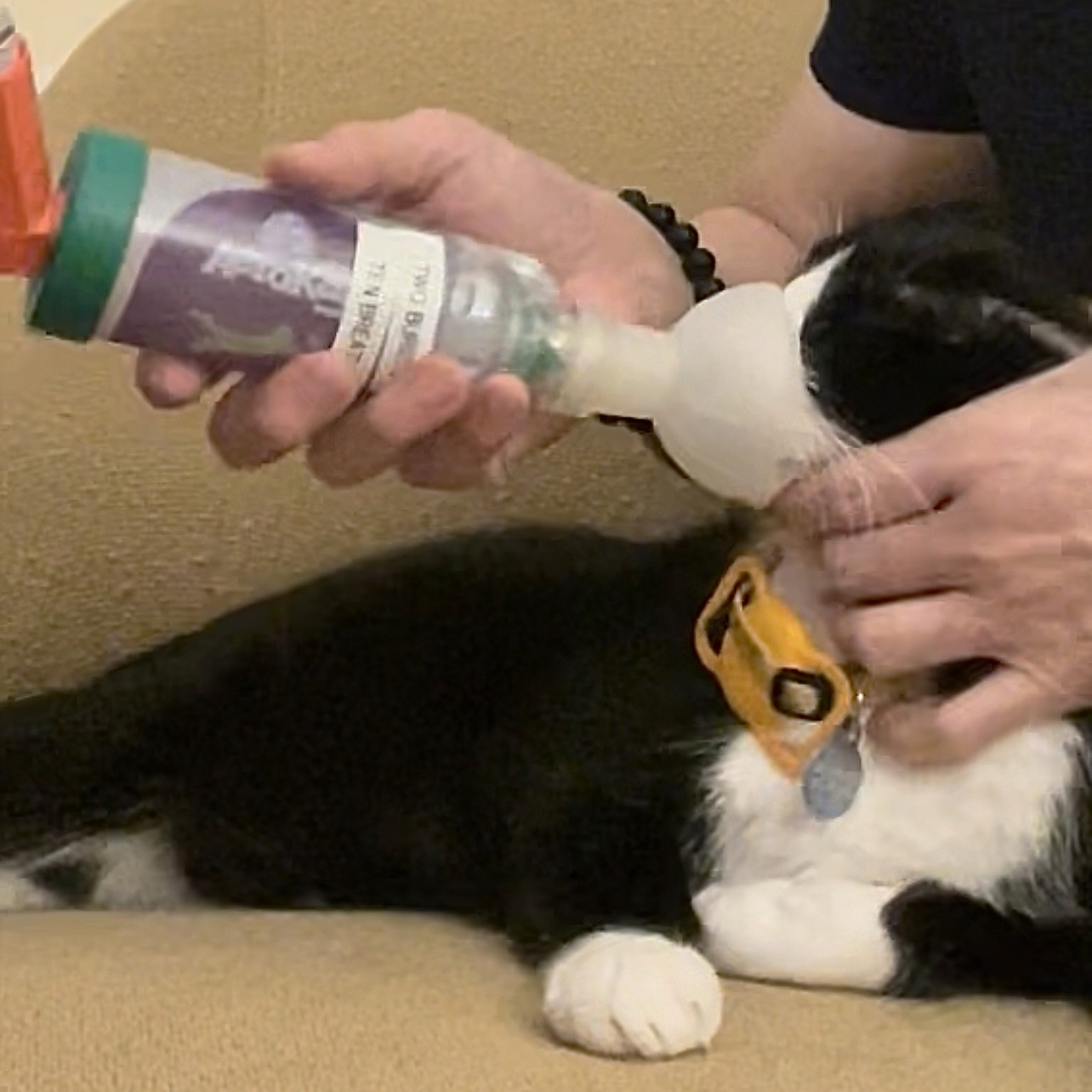
Other cats dislike having a mask on their face for inhalation therapy. One workaround (suggested by one of our clients!) is to apply some Churu or other lickable treat on the inside surface of the mask and let the cat lick it off; then stealthily place it over their face.
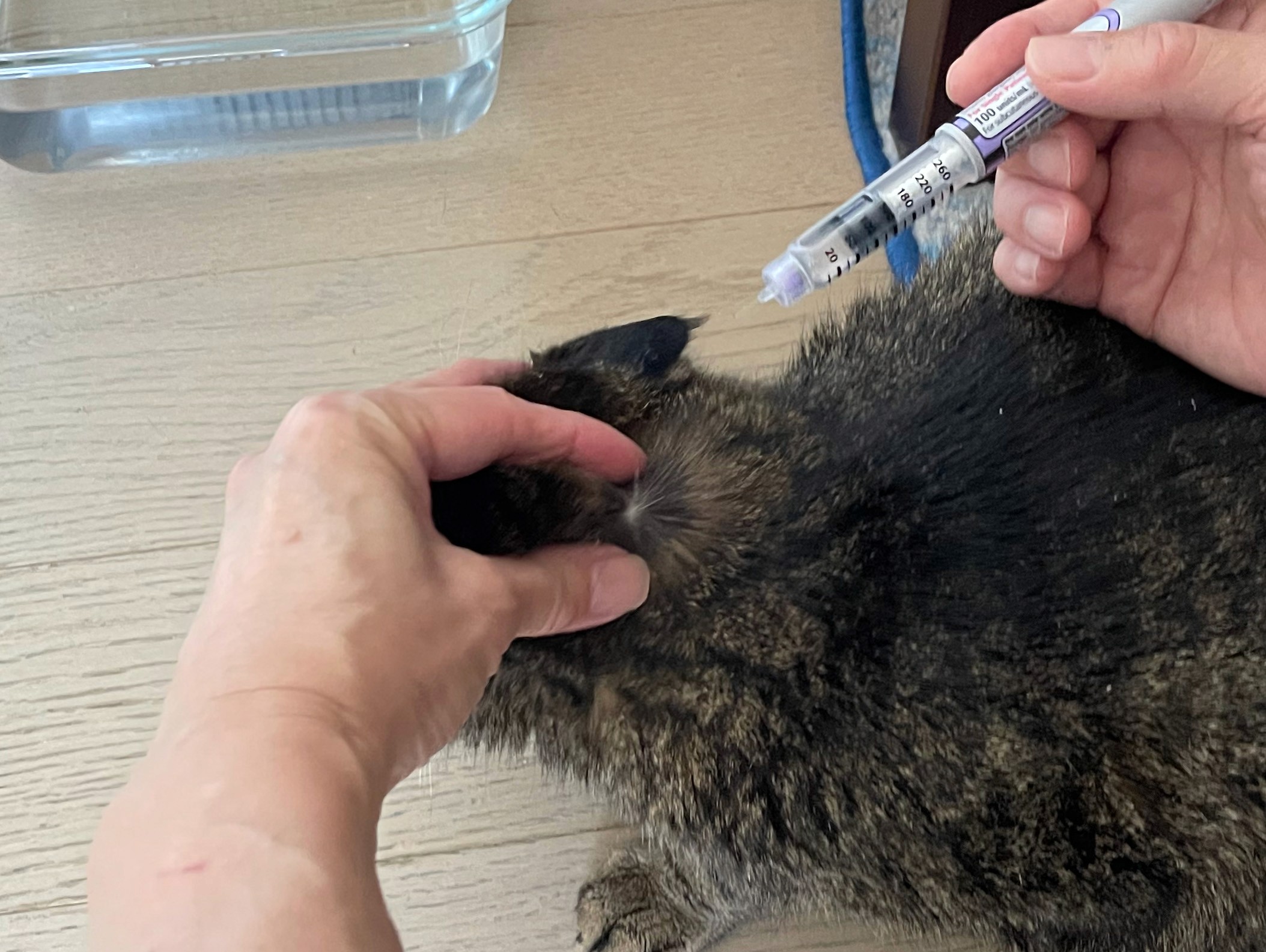
We’ve found that insulin shots are actually pretty easy to give to most cats, whether through a Lantus pen or by syringe. They seem to know they need it and are pretty stoic about accepting their injections, as long as they’re being held properly and the process is done quickly and confidently. I’ve even had cats that continued eating while I was injecting them.
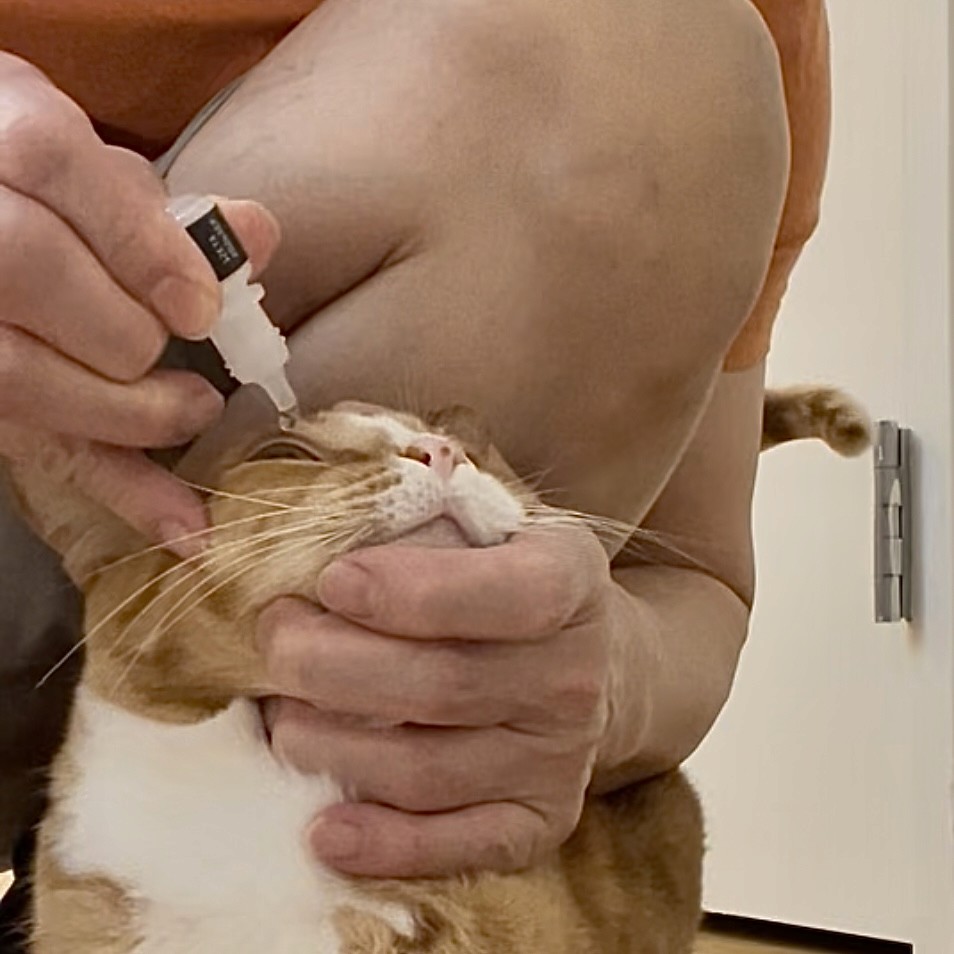
Cats also have the same kinds of eye problems as humans. We’ve given meds to multiple cats experiencing eye issues, especially those related to glaucoma. In one case, the cat required two to three different drops in each eye, given 5 minutes apart. This can be difficult if the cat is skittish. Sometimes the only solution is to put the cat in the bathroom and close the door.
Screenshot
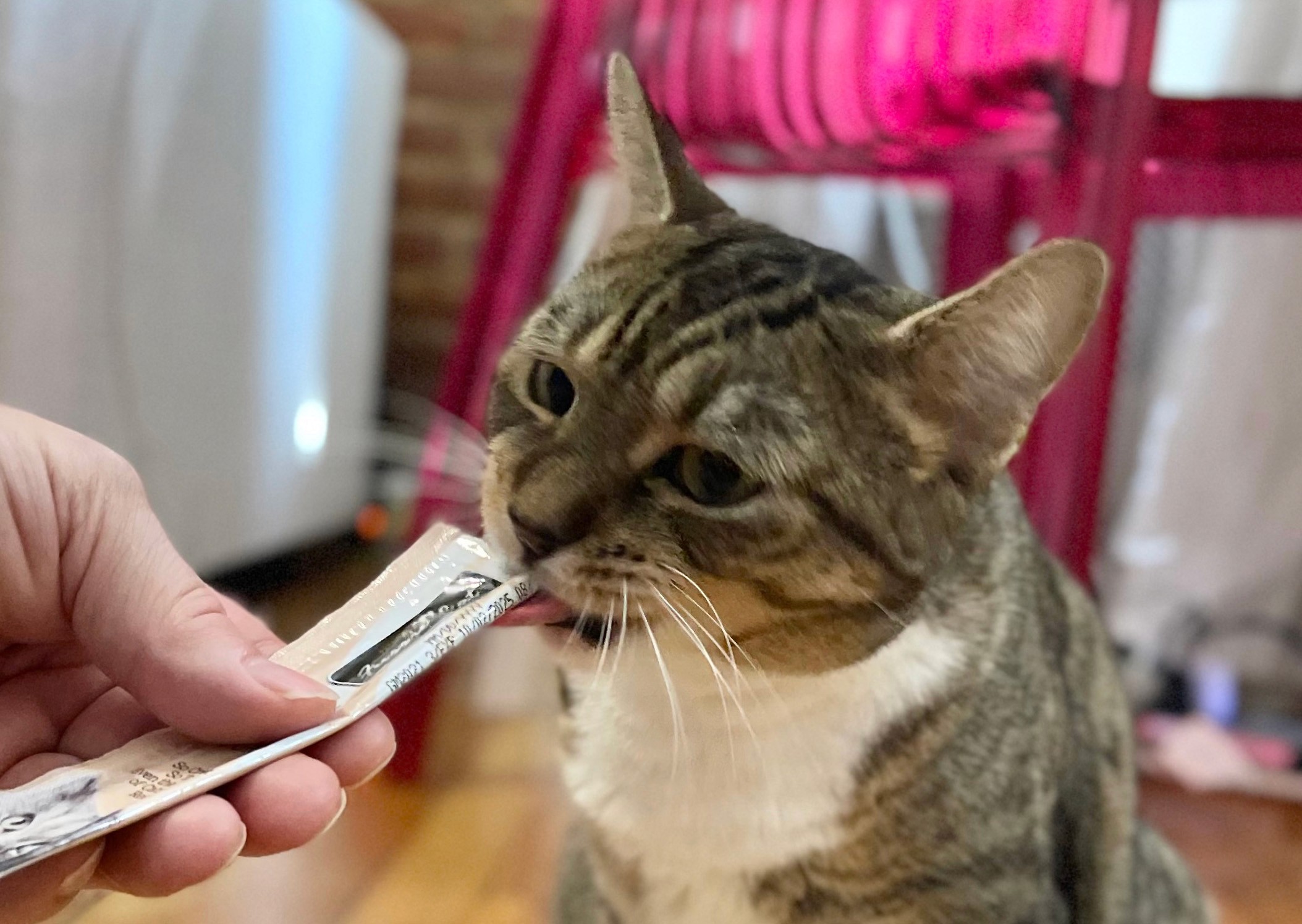
Oral medications can frequently be given either through pill pockets or hidden in lickable treats. We’ve had great success with many cats hiding their pills in a Churu clickable pouch. One advantage of using lickables is that cats slurp them rather than chew, so there’s far less chance of them discovering the medicine hidden inside the pouch. Make sure to break up larger pills into several smaller pieces.
The exception is with liquid meds that can’t be mixed with food (or which no cat would touch if you did). These must be given directly to the mouth via syringe and most cats truly detest this procedure, so much so that they’ll bolt if they see the syringe before the actual administration takes place. One needs to hide it, get a firm hold on the cat, especially the head, and open the mouth, and insert the syringe near the back of the throat where the liquid can’t be spat out easily.
Needless to say, when you hire a cat-sitter to care for your cat with medical needs, you don’t want to take any chances that the sitter won’t have the skills or experience necessary to properly administer potentially life-sustaining drugs to your precious kitty. For example, if insulin isn’t injected properly it can dribble out of the needle onto a cat’s fur instead of finding a place under their skin, where it can be properly absorbed. Without maintaining a proper level of insulin, the cat can go into shock and die.
If you need to hire a sitter for a cat that requires giving medicine, make absolutely sure that the sitter has the proper training and experience to do it.